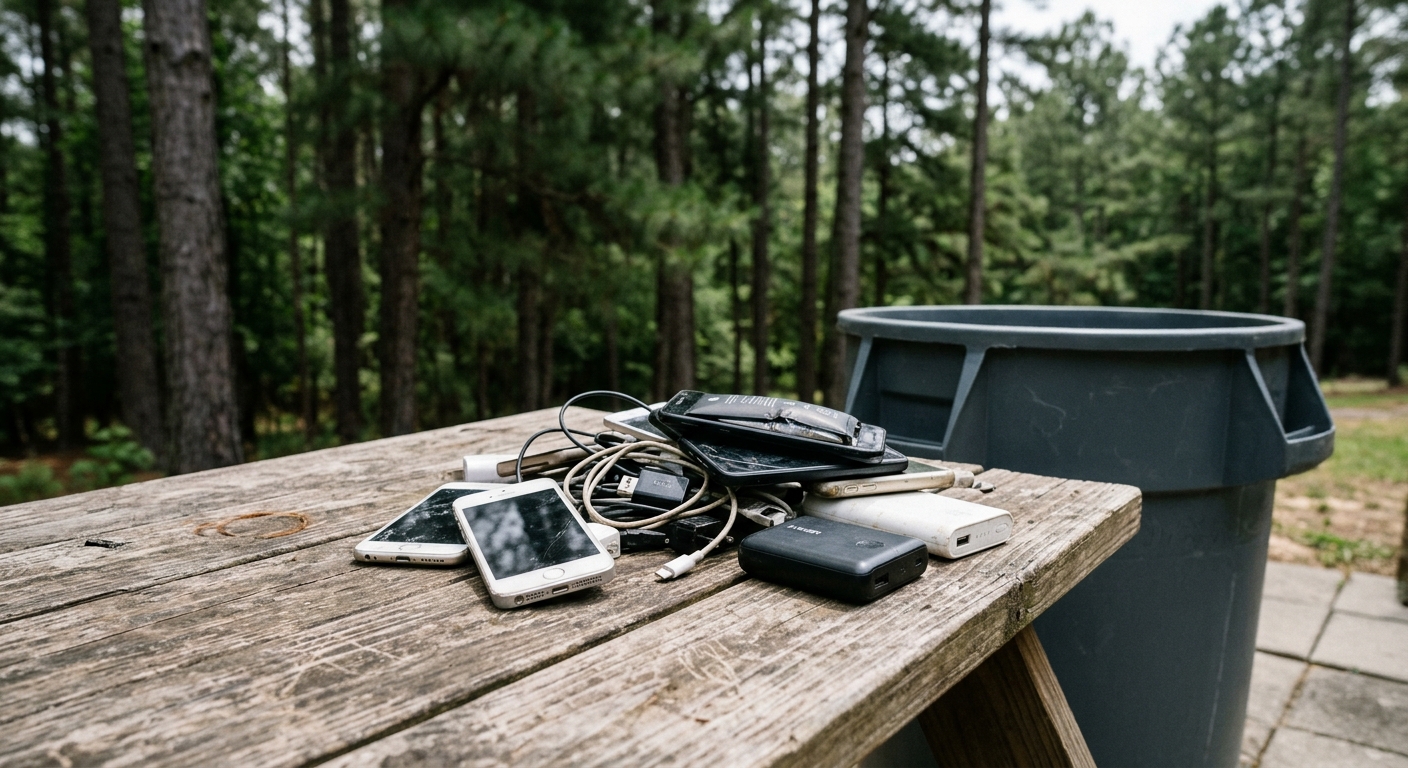
AI-generated illustration; not a photograph of the reported event.
- calendar_today November 18, 2026
New Disposal Ban Targets Lithium-Ion Batteries
Starting December 1, 2026, North Carolina will prohibit the disposal of lithium-ion batteries in municipal solid waste landfills and permitted incineration facilities. This measure, established by state officials, comes as a response to growing concerns over severe fire hazards and potential equipment damage that may occur during waste collection, transport, and mechanical processing of battery-laden materials.
Impacted Devices and Handling Rules
The ban affects lithium-ion batteries commonly used in rechargeable electronics, workplace equipment, commercial tools, and mobile devices across the state. Under the new statutory requirements, entire devices containing lithium-ion batteries are not to be deposited in regular trash or standard recycling containers while the battery remains inside. This is intended to prevent accidental fires or equipment failures during waste processing.
Alkaline Batteries and Other Streams
It is important to note that the ban does not extend to standard alkaline batteries, which remain eligible for regular disposal. All parties, including small-scale producers of spent batteries, must manage lithium-ion batteries separately from both municipal trash and recycling streams.
Options for Battery Collection and Recycling
Some retailers in North Carolina maintain collection programs for certain types of rechargeable batteries, though participation, accepted chemistries, and drop-off policies vary from store to store. Businesses and residents are strictly barred from placing lithium-ion batteries in scrap metal collection bins. According to state guidance, loose batteries mixed with scrap metal can suffer punctures or crushing, leading to electrical short circuits that sharply increase fire risk.
Specialized Handling for Damaged Batteries and Devices
State officials emphasize the need for immediate isolation of damaged, leaking, or swollen battery cells due to the higher risk of combustion. Devices such as electronic vaping apparatus also require special hazardous waste procedures, given the presence of liquid chemicals and residual nicotine. These must be processed via certified hazardous waste vendors.
New Packaging and Marketing Restrictions Enacted
Alongside the battery disposal ban, the legislation also establishes marketing restrictions on rigid plastic bottle containers sold in North Carolina. Beverage bottles or similar containers labeled as “degradable,” “biodegradable,” or “compostable” may not be sold unless they meet state standards and carry a clear disclosure: “Not Recyclable, Do Not Recycle.” These advisories must be as prominent as any claims of biodegradability.
Overview of North Carolina’s Landfill Restrictions
Lithium-ion batteries join a roster of items already banned from disposal in solid waste landfills under Chapter 130A of the state’s statutes. The list also prohibits used motor oil, motor vehicle oil filters, lead-acid batteries, white goods appliances, aluminum beverage cans, and ethylene glycol antifreeze from entering landfills. Regulations further prohibit disposal of scrap pneumatic tires, oyster shells, and many rigid plastic containers, with certain exemptions for specialized uses (such as oil and pesticide bottles).
Technology and Electronic Waste
Under G.S. 130A-309.131, computer equipment and television sets may not be discarded in landfills. Yard trash is excluded unless facilities maintain approved composting systems.
Incineration Restrictions and Exemptions
The same environmental prohibitions that apply to landfill disposal will now cover commercial solid waste incinerators. These facilities will be barred from burning aluminum cans, lead-acid batteries, white goods, computer equipment, televisions, ethylene glycol antifreeze, and—starting December 1, 2026—lithium-ion batteries. Exemptions extend to industrial incineration units operated solely by the waste generator and certain unrecyclable antifreeze types.
Beverage Industry Disposal Requirements
Commercial beverage license holders in North Carolina, such as restaurants and bars, may not knowingly dispose of specified recyclable beverage containers in landfills or incinerators, under section 18B-1006.1 of state law.
Conclusion
North Carolina’s new rules reflect a growing effort to mitigate the fire hazards and environmental risks associated with improper lithium-ion battery disposal. The expanded landfill and incineration bans impose stricter management obligations on individuals, businesses, and waste handlers statewide, while codifying safe disposal practices for other regulated products and packaging materials.
Related coverage
Source: cbs17.com.