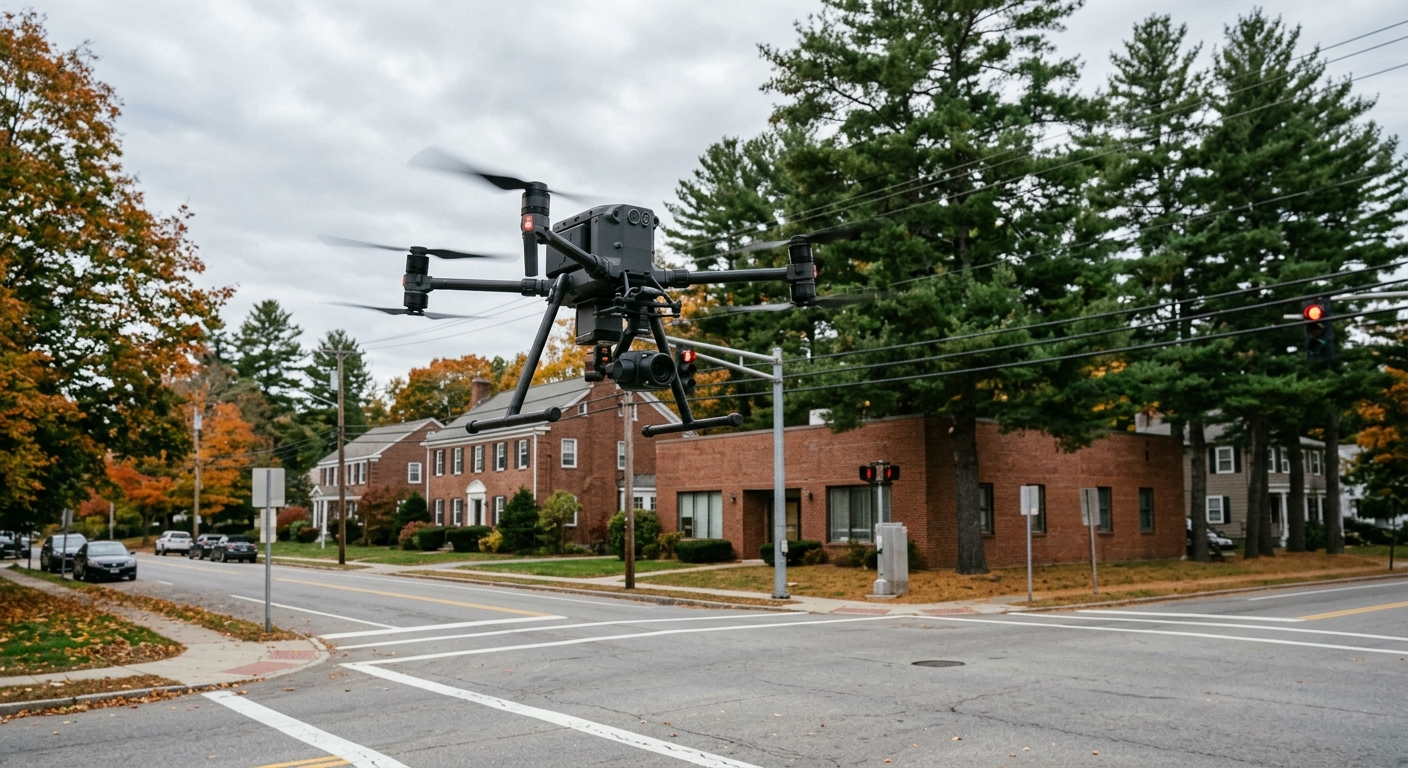
AI-generated illustration; not a photograph of the reported event.
- calendar_today November 2, 2026
Introduction of 911 Drones in North Carolina
Central North Carolina will see the launch of 911 drones as early as next year, as part of the expanding Drones as First Responders (DFR) program. Local police departments, specifically those in Fayetteville and Durham, are implementing this technology to enable quicker and more strategic responses to emergency calls.
How the Drones as First Responders Program Works
The DFR initiative involves stationing drones at various dock points within police jurisdictions. When a 911 call is received, trained officers can deploy these drones remotely and monitor a live video feed from the scene. This allows officers to quickly assess situations and determine appropriate response measures prior to physically arriving.
Fayetteville Police Chief Roberto Bryan Jr. emphasized the efficiency the drones bring: “One of the main advantages with those drones, they don't get stuck in traffic, so you're able to get to that scene in seconds versus minutes.” Both public and officer safety are expected to benefit from the intelligence these drones provide at the initial stage of incident response.
Departmental Plans and Timelines
Fayetteville and Durham police departments are among the first in the region to formally approve the adoption of the DFR program. Fayetteville’s city council has approved a $17.4 million, six-year contract with Axon, bundling the drone program with technologies such as body cameras and tasers. This consolidated contract is projected to save the city $12.5 million over its term, according to Chief Bryan.
The goal in Fayetteville is to have drones operational within the first three months of 2027. In Durham, the police department remains in earlier planning stages and has not provided a deployment timeline but has already acquired two of its potential four drones.
Other regional agencies, like the Raleigh Police Department, are still in the process of researching the technology, while Apex has clarified that it currently has no active proposal before local authorities for adopting the DFR program.
Community and Council Reactions to Drone Surveillance
The increasing use of drones has fueled debate among residents and council members about potential surveillance overreach and privacy issues. During a Durham city council meeting in June 2026, some residents and officials voiced concerns. One resident stated, “'No' to police surveillance technologies that would harm Durham residents. No to new drones, robots, cameras.”
Fayetteville council member Shaun McMillan also shared reservations about granting extensive surveillance authority prior to the vote on the new contract. In response, Chief Bryan committed to transparency, promising a forward-facing platform for public access to information on drone deployments, including details on call types and response times.
Drones in Action: Lessons from Other North Carolina Agencies
The use of drones in law enforcement is not entirely new to North Carolina. Burlington Police deployed the technology in 2024, noting benefits in situational awareness for officers. Forsyth County Sheriff’s Office has operated a DFR program since 2022 and even partners with Duke Health to deliver Automated External Defibrillators (AEDs) via drone.
Oversight and operational protocols are a key focus, with daily flight logs, hardware checks, and multi-level supervision established within Forsyth’s program. Major James Rae highlighted the trust placed in trained deputies to determine drone deployments and maintain accountability similar to that of traditional aviation.
Conclusion
As Fayetteville and Durham prepare to deploy 911 drones in the coming year, local agencies are navigating the balance between improving emergency response and addressing public concerns about privacy and surveillance. The emphasis on transparency and policy development will be crucial as law enforcement drones become a more common fixture in public safety efforts.
Source: wral.com.