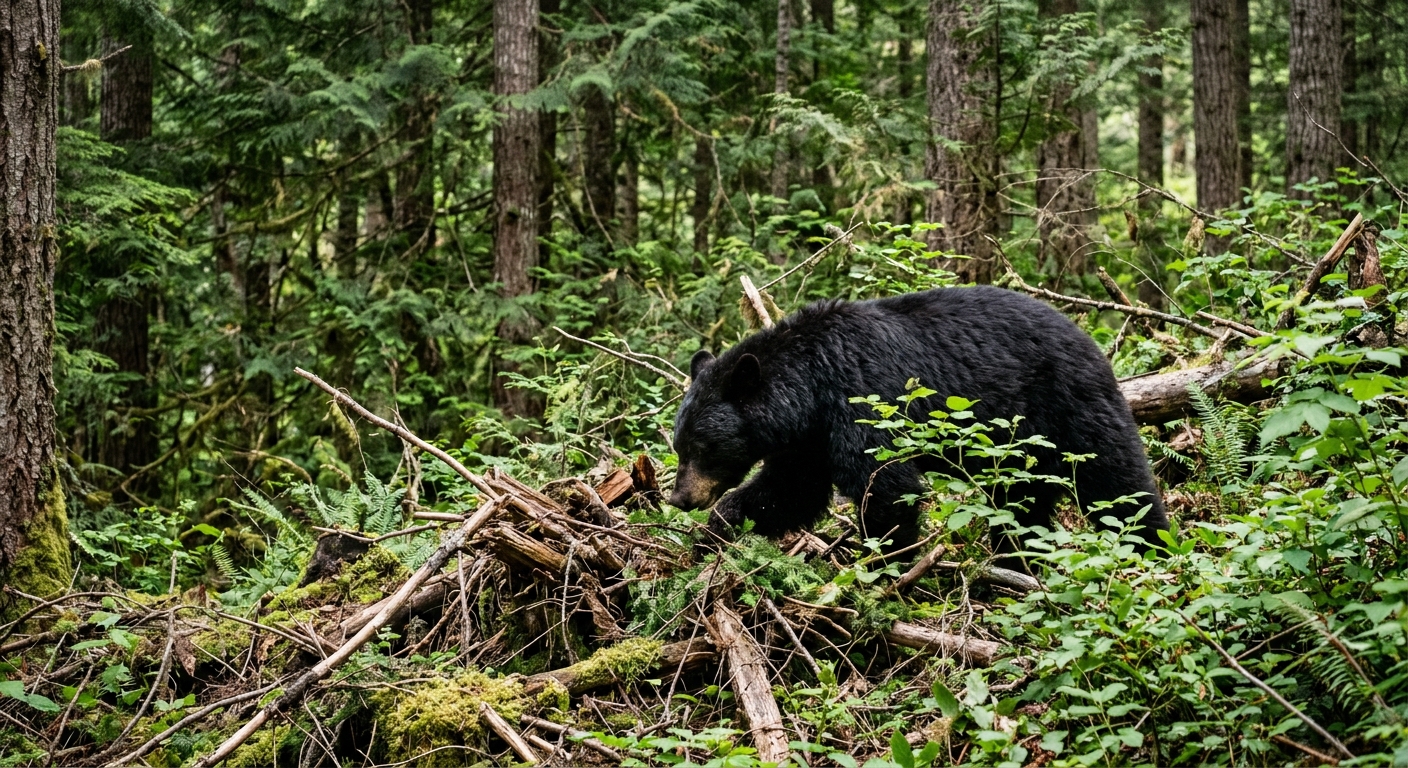
AI-generated illustration; not a photograph of the reported event.
- calendar_today October 22, 2026
NC State Researchers Complete Genomic Wildlife Study
A team at North Carolina State University has concluded a comprehensive genomic study of north carolina black bears, identifying crucial differences in genetic health between mountain and coastal populations. The findings provide new insights for wildlife managers and law enforcement battling issues such as bear inbreeding risk and illegal poaching.
Differing Genetic Diversity in Bear Populations
Led by postdoctoral researcher Isabella Livingston and genomics professor Matthew Breen of NC State’s College of Veterinary Medicine, the research team analyzed DNA from 76 black bears. The bears were sampled from two key zones: 49 from the Mountain Bear Management Unit (MBMU) and 27 from the Coastal Bear Management Unit (CBMU).
The results highlighted that coastal bear population exhibited lower genetic diversity and higher levels of inbreeding, despite their relatively larger group size. By comparison, the mountain bear population benefited from a wider gene pool, attributed to their ability to roam over greater distances and state lines.
Landscape Changes and Habitat Fragmentation
Livingston and her team overlaid their genetic survey with landscape data to understand barriers impacting population structure. “We looked at how the landscapes in each of these management units have changed,” Livingston said. “There’s been more change in the coastal region compared to the mountains. Coastal bears are running out of usable habitat, so there is evidence of potential isolation into breeding neighborhoods where they may not have access to every individual within the CBMU, resulting in inbreeding and genetic fragility.”
The mountain region, in contrast, offers more continuous habitats that help sustain genetic diversity in bears. Geographic features such as mountain ranges and interstate corridors facilitate movement—and, as Breen noted, “Bears don’t look at state borders and think, 'Oh, well, better stop there.' So it’s possible that the genetic diversity in that western part of the state might reflect a natural infusion and exchange with bears from other states, as opposed to the eastern population, which backs into an ocean.”
Genetic Fingerprinting: A New Wildlife Management Tool
To turn this genomic wildlife study into practical solutions, the NC State researchers developed a panel of single nucleotide polymorphisms (SNPs)—genetic markers that serve as unique fingerprints for each bear. “Basically, groups of SNPs act as genetic fingerprints that we can use to find out where a bear is from and who it is,” Livingston explained. This panel supports wildlife management tools and provides law enforcement with the means to identify the origins of bears, which is valuable for poaching investigations and for tracking bear population monitoring.
Ongoing Collaboration and Conservation Implications
The study, published in the journal Genes and supported partly by the Pittman–Robertson Federal Aid to Wildlife Restoration Grant, included additional contributions from NC State researchers Allison Dickey, Megan Dillon, Nicholas Gould, Jennifer Strules, Christopher DePerno, Michael Stoskopf, and Kelly Meiklejohn.
The NC State research team plans to continue working with the North Carolina Wildlife Resources Commission and other stakeholders to apply these genetic findings in management and conservation efforts. According to Breen, “This work shows that genome-wide data of wildlife populations can reveal population structure, demographic history and emerging connectivity concerns that may not be apparent from census size or management boundaries alone.”
Looking Forward
This research lays groundwork for sustaining healthy, viable populations of north carolina black bears by providing concrete genetic data to inform wildlife management decisions and adaptations to bear habitat changes. The use of genome analysis and targeted SNP panels is expected to play a significant role in protecting bear populations and combating illegal poaching in the future.
Source: cbs17.com.