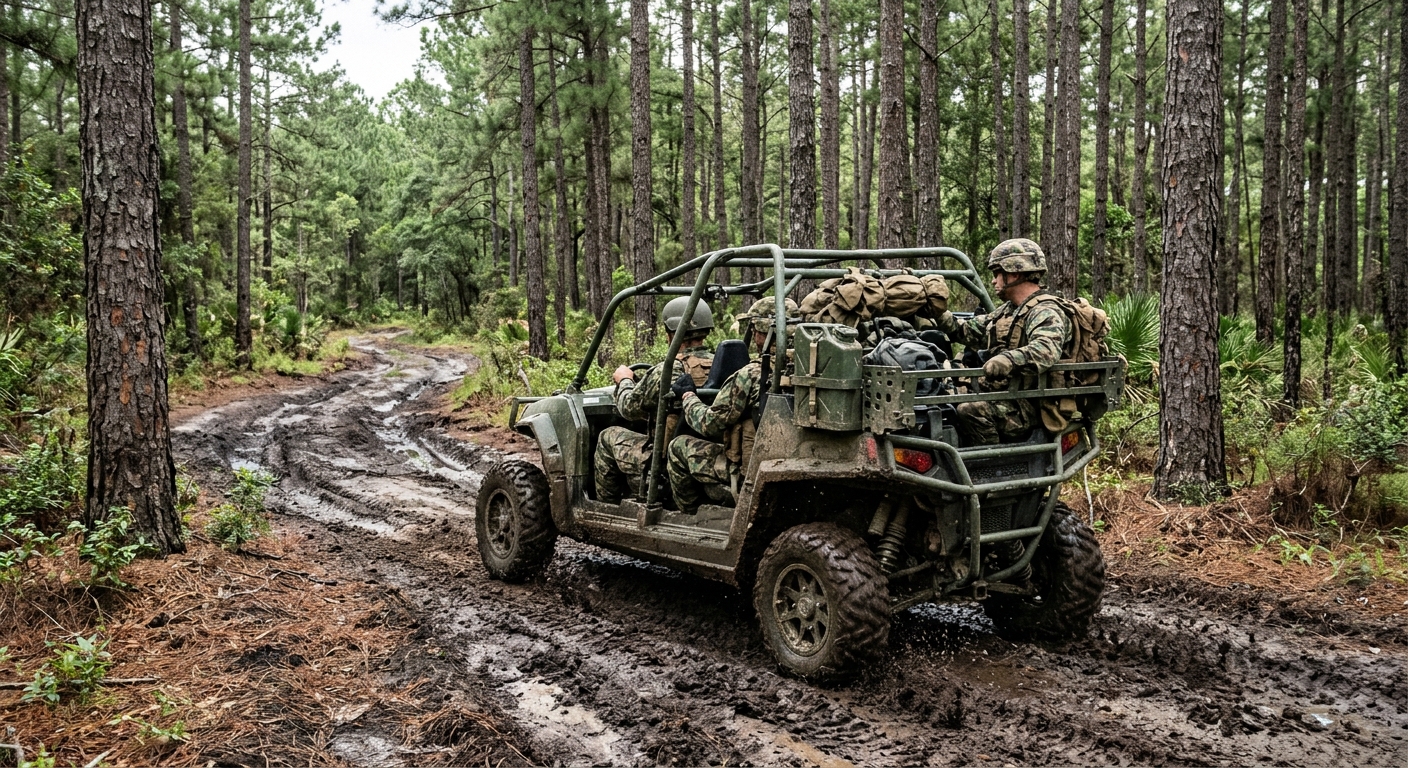
AI-generated illustration; not a photograph of the reported event.
- calendar_today October 21, 2026
Army Significantly Expands Infantry Squad Vehicle Orders
The U.S. Army has substantially increased its order for Infantry Squad Vehicles (ISVs), with GM Defense announcing that the order now stands at nearly 12,000 units. These ISVs are produced in Mooresville, North Carolina by Hendrick Motorsports and delivered from a purpose-built GM center in Concord, approximately 20 miles away.
Development and Testing with Airborne Division at Fort Bragg
The 82nd Airborne Division at Fort Bragg played a critical role in testing and shaping the ISV, providing feedback throughout its development. The vehicle, resembling a modern version of the iconic military jeep but without armor, is designed to swiftly transport up to nine soldiers and their equipment over challenging terrain. Unlike fighting vehicles, the ISV prioritizes mobility and light weight, making it effective for rapid movement but not direct combat.
Versatility and Transport Capabilities of the M1301 Vehicle
The ISV, officially designated as the M1301, is engineered for air mobility. It can be transported by helicopters like the CH-47 Chinook or other aircraft, enabling air assault and airborne missions. The vehicle is based on the road-legal Chevrolet Colorado ZR2 midsize truck, but features a distinctive doorless, steel and aluminum design with a rollover bar for increased safety and operational utility.
New Variants and Advanced Technologies
Responding to field feedback, GM Defense has developed a five-soldier variant of the infantry squad vehicle, expected to be deployed across 39 active-duty and National Guard brigades. In addition, the Army is testing new technology by equipping the ISV with the Army Multi-Purpose High Energy Laser (AMP-HEL) system. This drone-killer laser, mounted on the rear of the vehicle, was trialed over the summer as part of efforts to integrate advanced counter-drone capabilities into ground transport vehicles.
Expanding Military Transportation and Future Plans
The ISV's light, 5,000-pound build and use of commercial off-the-shelf parts—making up 90 percent of its components—help reduce maintenance costs and speed up repairs. Soldiers have highlighted the vehicle's speed and low profile as crucial advantages during field operations and even for humanitarian missions, such as delivering supplies to areas affected by Hurricane Helene. The Army is also exploring a "heavy" variant of the ISV, which could be equipped with additional systems like directed-energy weapons, radars, and microwave technologies.
ISV Deployment and Impact
The first unit to receive the ISV was the 1st Brigade Combat Team, 82nd Airborne Division at Fort Bragg. Since then, its footprint has expanded to various operations, including border support missions and emergency response in regions with damaged road infrastructure. Originally, the Army's requirement was for 2,593 vehicles, but increased reliance and versatility have prompted the larger orders now reported by GM Defense.
Continued Collaboration and Modernization
As the Army modernizes its fleet, the partnership with GM Defense and the incorporation of technologies like the drone laser system signal ongoing efforts to equip military forces with more adaptable and advanced transportation solutions. The ISV program exemplifies a shift towards leveraging commercial platforms for military needs while maintaining rapid deployability and multi-mission capabilities.
Source: cbs17.com.