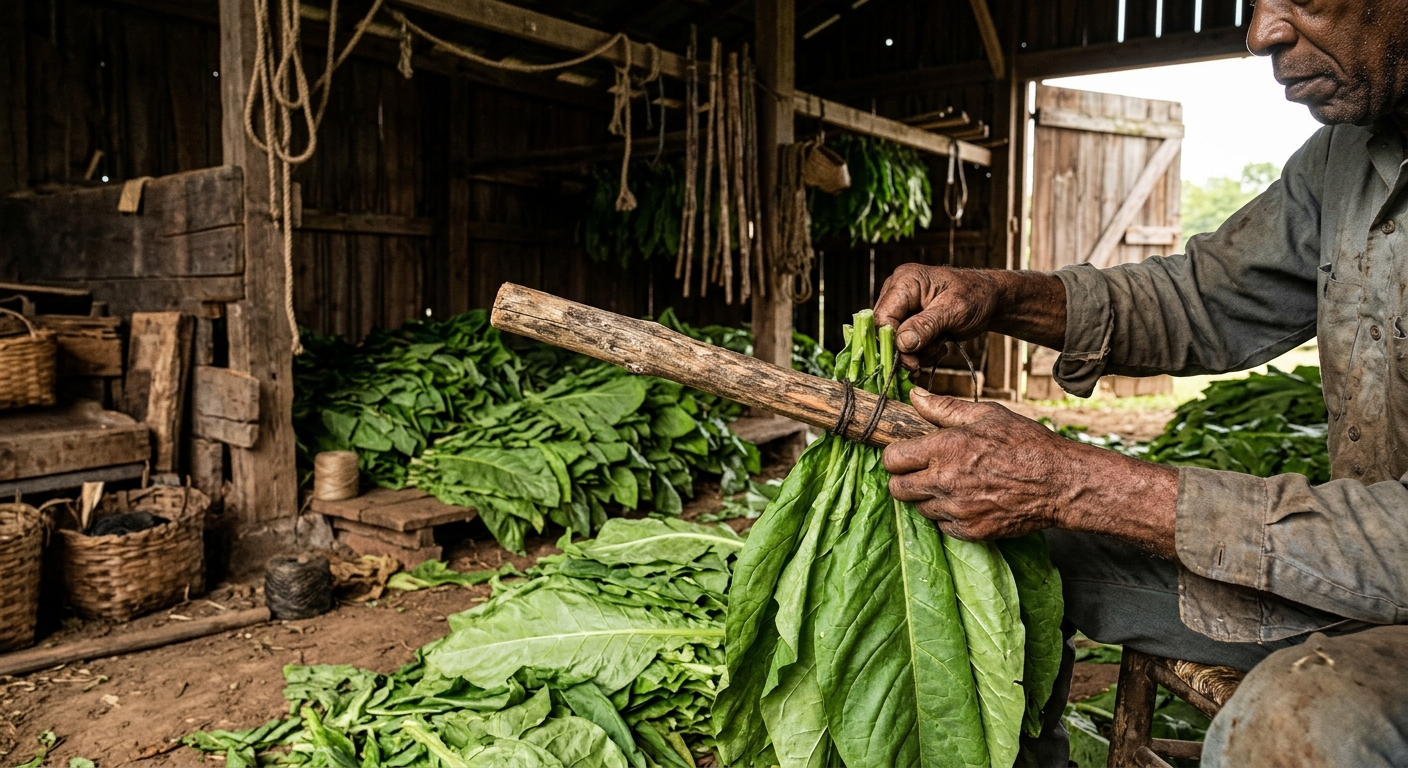
AI-generated illustration; not a photograph of the reported event.
- calendar_today October 21, 2026
Generations Gather for Tobacco Stringing Contest at North Carolina State Fair
Each year, the North Carolina State Fair in Raleigh hosts a unique event that celebrates one of the state’s enduring agricultural traditions: tobacco stringing. In the Heritage Circle of the fairgrounds, teams composed of family members and friends compete, keeping alive a skill that once tied together communities and generations across rural North Carolina.
The Art of Stringing and Looping Tobacco
For much of the state’s history, tobacco was harvested laboriously by hand, strung onto long wooden sticks, and cured in log barns. This work required both speed and deft technique. The terminology for the process varies by region: in the central part of the state, it’s called tobacco stringing, while in the east, the same task is known as tobacco looping. Today, the fair’s contest pays homage to both traditions, offering a glimpse into the past for new generations.
Family Stories Across the Generations
This year’s contest featured competitors from multiple generations. Twelve-year-old Sophie Sunday, the youngest participant, explained the event to her puzzled schoolmates, who had little idea what looping tobacco entailed. Meanwhile, Ruth Coats, the oldest contestant at 97, reflected on a lifetime spent working north carolina tobacco with her family near the Virginia border. She recalled, “It was good, hard work, but it made you much stronger. A lot of memories of my family and friends.”
Modern Shifts in Tobacco Farming
Tobacco’s role in the state has evolved dramatically. Once North Carolina’s largest cash crop, flue cured tobacco is now the third most valuable, trailing corn and soybeans. The U.S. Department of Agriculture reports that more than 248 million pounds of tobacco were produced last year, valued at nearly $546 million. Today, tobacco is largely harvested by machine and cured in modern metal barns, but the fair contest highlights the old ways—reminding participants and spectators alike of the tradition’s importance.
Competition Highlights and Team Rivalries
This year, a dozen teams, including The Tie Masters, Mule Stringers, and 89 & Twine, competed. Under the direction of Pat Short, superintendent of Heritage Circle, pairs of “handers” passed bunches of leaves to the stringer, who deftly wrapped each bundle with twine along a stick. The aim was to string at least 36 bundles per stick, all while racing against the clock and striving for the tightest, most secure tie—because poorly secured leaves could spell disaster during the tobacco curing process.
Among the competitors were three generations of one family: Sandy Jones, who learned looping from her mother and passed it down to her daughter and granddaughter, led last year’s championship team the Maple Hill Loopers. Sophie Sunday, her mother Annie, and great-aunt competed as The 3 Suckers. Ultimately, The Benson Nites edged out the rest, stringing their stick in just under one minute and four seconds. The 3 Suckers did not place, but for Sophie, the experience was about continuing a tobacco tradition rather than winning a prize.
Tobacco’s Legacy: Beyond the Leaf
Even as most tobacco grown in North Carolina is destined for smoking products, the plant’s role is evolving. Sophie voiced ambivalence about tobacco farming, aware of its health impacts as well as the promise it shows in fields like vaccine production and pharmaceuticals. Nevertheless, she is determined to carry on the know-how and memories: “When she has kids of her own, she’s going to teach them how to loop,” her grandmother said, summing up the enduring bonds forged by this longstanding practice.
The tobacco strung during the fair, grown at the Oxford Tobacco Research Station, will be sold to a contractor—illustrating how even old family farm rituals continue to intersect with the modern tobacco industry.
Source: cbs17.com.