- calendar_today July 17, 2026
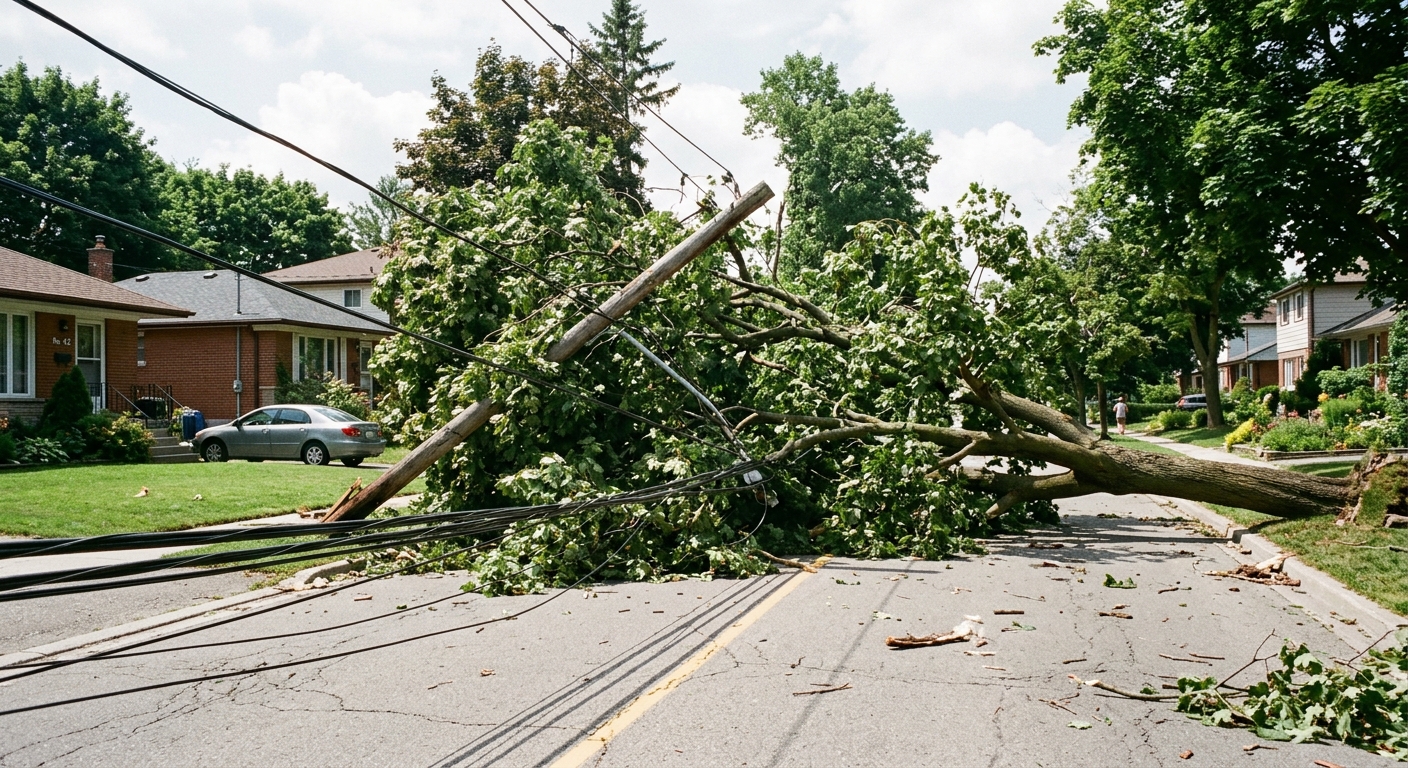
North & South Carolina — A significant tree fall raleigh event on Friday afternoon brought major disruptions to Glenwood Avenue, underscoring the growing vulnerability of urban infrastructure in the region amid worsening extreme weather. The incident left residents and commuters navigating Downed power lines, traffic delays, and near-record heat.
Glenwood Avenue Blocked by Fallen Tree
Shortly after midday, a fallen tree came crashing down across Glenwood Avenue, just north of the Carolina Country Club, resulting in substantial service interruptions. The tree pulled down power lines and caused power pole damage to at least three poles along the corridor, according to local utility companies. This event led to an immediate power outage for nearly 300 customers in the area, leaving residents without essential electricity services, including air conditioning, during a relentless heat wave.
Power Lines Down Bring Widespread Outages
The incident caused power lines down across a key artery, with utility crews deployed rapidly to the scene. With air conditioning systems failing during a heat index approaching 100 degrees, concerns mounted for the welfare of local residents and businesses affected by the sudden loss of cooling. The North & South Carolina region has faced repeated extreme heat impact scenarios in recent weeks, amplifying risks of both equipment failure and public safety incidents such as this.
Major Traffic Delays Compound Rush Hour
Police closed Glenwood Avenue in both directions at Vick Avenue, leading to traffic delays of up to 40 minutes during the critical afternoon rush. Commuters were diverted as emergency responders and utility crews coordinated cleanup and repair operations. Authorities reported no vehicle accidents related to the tree fall but noted that the transportation network remained strained for hours afterward, impacting the region’s mobility and economy.
Extreme Heat and Drought Stress Urban Trees
While severe weather was ruled out as the trigger for the event, officials suspect the combined effects of persistent heat and tree stress drought played a major role. Residents in the vicinity described hearing a loud boom reminiscent of a transformer explosion, quickly followed by widespread power outages and the sight of toppled trees. Certified arborist tree health expert Rondel Guffey explained that drought and extreme heat sap trees of critical moisture, increasing the risk of sudden limb failures or entire tree collapses. Early leaf loss and dead branches—symptoms observed in North & South Carolina urban forests—are warning signs of the mounting stress on trees throughout the region.
Implications for Power Infrastructure and Community Safety
The Glenwood Avenue tree fall raleigh episode serves as a reminder of the delicate balance between natural elements and aging infrastructure in rapidly growing cities like Raleigh. Power outage events tied to power lines down and power pole damage can quickly cascade, hampering emergency response and exposing vulnerabilities in both the electric grid and transportation systems. Local officials are urging homeowners and property managers to schedule regular inspections and implement preventative maintenance to address potential hazards before they escalate.
Preparing for the Future: Awareness and Action
With meteorologists predicting continued periods of elevated heat index and sporadic rainfall across North & South Carolina, the emphasis is shifting toward more comprehensive risk management strategies for urban forestry and power distribution networks. Experts recommend a focus on identifying warning signs of arborist tree health decline, investing in resilient landscaping, and increasing public awareness of the dangers posed by extreme heat impact and tree stress drought.
Community Response and Long-Term Outlook
Crews worked through the evening on Glenwood Avenue (sometimes referred to as glennwood avenue in local traffic reports), restoring service and reopening roadways to minimize the traffic delay for affected neighborhoods. As regional leaders in North & South Carolina continue to evaluate the incident’s lessons, calls are intensifying for additional resources to protect residents and urban infrastructure from future weather-driven disruptions. The tree fall raleigh event may ultimately prompt new standards for power line management and tree maintenance, aiming to reduce both service interruptions and safety risks across the region.